


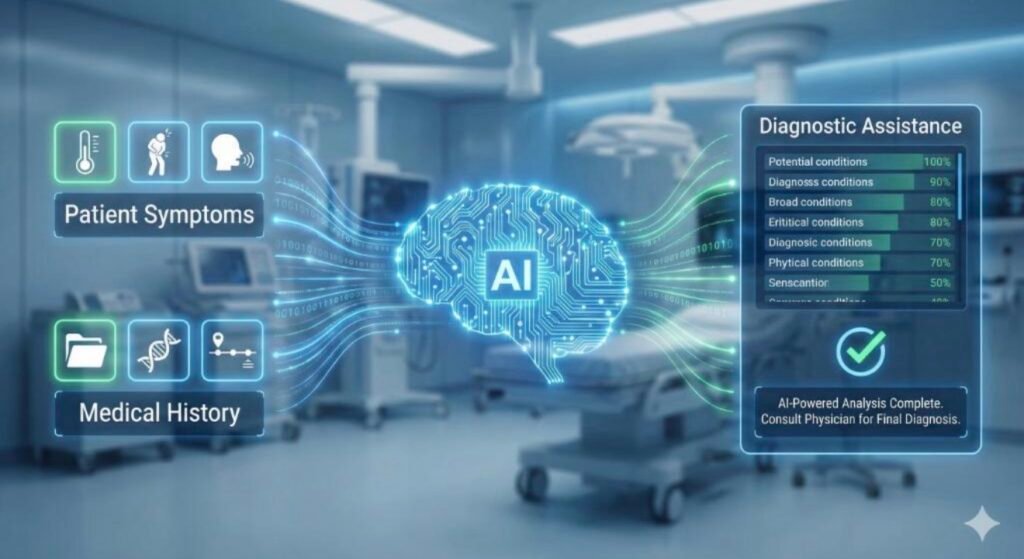
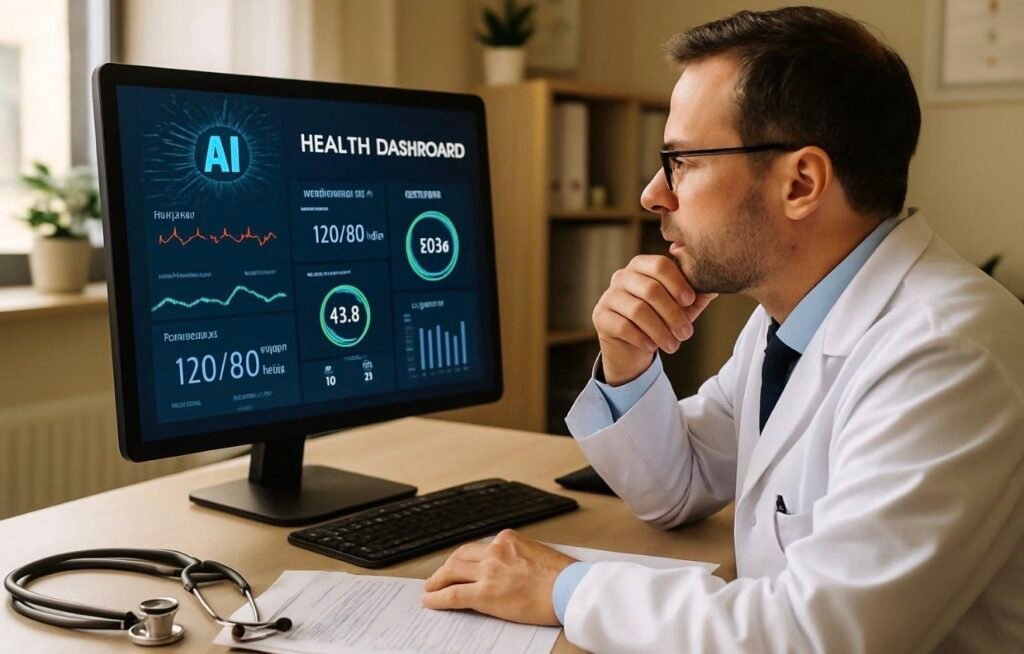


Artificial Intelligence (AI) is revolutionizing healthcare in 2026. From detecting diseases earlier to assisting doctors with complex diagnoses, AI-powered technologies are making healthcare faster, more accurate, and more accessible.
Hospitals, clinics, research organizations, and pharmaceutical companies are increasingly adopting AI to improve patient outcomes and reduce operational costs. In this article, we’ll explore the latest uses of AI in healthcare and how it is shaping the future of medicine.
What is AI in Healthcare?
AI in healthcare refers to the use of Artificial Intelligence, Machine Learning (ML), and Deep Learning technologies to analyze medical data, assist healthcare professionals, automate routine tasks, and improve patient care.
AI systems can process vast amounts of medical information much faster than humans, helping doctors make informed decisions.
Latest Uses of AI in Healthcare
1. Early Disease Detection
AI can analyze medical images, lab reports, and patient history to identify diseases such as:
- Cancer
- Heart disease
- Diabetes
- Stroke
- Tuberculosis
- Pneumonia
Early detection improves treatment success rates and can save lives.
2. AI-Assisted Medical Imaging
Radiologists use AI to examine:
- X-rays
- CT scans
- MRI scans
- Ultrasounds
- Mammograms
AI highlights abnormal patterns, helping doctors detect issues more quickly and accurately.
3. Personalized Treatment Plans
AI analyzes a patient’s medical history, genetics, lifestyle, and current condition to recommend personalized treatment options.
This approach can improve treatment effectiveness while reducing unnecessary medications.
4. Virtual Health Assistants
AI-powered virtual assistants help patients by:
- Scheduling appointments
- Sending medication reminders
- Answering common health questions
- Monitoring symptoms
- Providing basic health guidance
These tools improve convenience and reduce the workload on healthcare staff.
5. Drug Discovery and Research
Developing new medicines traditionally takes years.
AI accelerates this process by:
- Identifying promising drug candidates
- Predicting drug interactions
- Analyzing clinical trial data
- Supporting pharmaceutical research
This helps bring new treatments to patients faster.
6. Remote Patient Monitoring
Wearable devices and smart health monitors use AI to track:
- Heart rate
- Blood pressure
- Blood oxygen levels
- Sleep quality
- Physical activity
Doctors can monitor patients remotely and respond quickly if health conditions change.
7. AI-Powered Robotic Surgery
AI-assisted robotic systems help surgeons perform precise procedures with improved accuracy.
Potential benefits include:
- Smaller incisions
- Reduced blood loss
- Faster recovery
- Lower risk of complications
8. Hospital Management
AI also improves hospital operations by:
- Managing patient records
- Predicting patient admissions
- Optimizing staff schedules
- Tracking medical equipment
- Reducing administrative work
This allows healthcare professionals to focus more on patient care.
Benefits of AI in Healthcare
AI offers several advantages, including:
- Faster diagnosis
- Improved accuracy
- Early disease detection
- Personalized healthcare
- Better patient monitoring
- Reduced healthcare costs
- Increased efficiency
- Support for medical research
Challenges of AI in Healthcare
Despite its benefits, AI adoption faces challenges such as:
- Patient data privacy
- Cybersecurity risks
- High implementation costs
- Regulatory compliance
- AI bias due to limited training data
- Need for human oversight
AI should support healthcare professionals, not replace them.
Future of AI in Healthcare
The future of AI in healthcare looks promising. Emerging trends include:
- AI-powered wearable devices
- Predictive healthcare analytics
- Digital twins for personalized medicine
- Advanced robotic surgery
- Faster vaccine and drug development
- AI-assisted mental health support
As AI technologies continue to improve, healthcare is expected to become more efficient, accessible, and patient-centered.
Final Thoughts
Artificial Intelligence is transforming healthcare in remarkable ways. From early disease detection and personalized treatments to hospital management and medical research, AI is helping healthcare professionals deliver better care.
While challenges such as data privacy and ethical concerns remain, responsible use of AI has the potential to improve outcomes for patients and healthcare providers worldwide.
Frequently Asked Questions (FAQs)
What is AI in healthcare?
AI in healthcare refers to the use of Artificial Intelligence technologies to assist with diagnosis, treatment, patient care, hospital management, and medical research.
Can AI replace doctors?
No. AI is designed to support healthcare professionals by providing insights and automating tasks, but it cannot replace human judgment and clinical expertise.
What are the biggest benefits of AI in healthcare?
Key benefits include faster diagnosis, early disease detection, personalized treatment plans, improved efficiency, and better patient monitoring.
Is AI used in hospitals today?
Yes. Many hospitals already use AI for medical imaging, patient monitoring, scheduling, predictive analytics, and administrative tasks.
What is the future of AI in healthcare?
Future developments include smarter diagnostics, AI-assisted robotic surgery, personalized medicine, predictive healthcare, and accelerated drug discovery.
Connect With Us
🌐 Main Blog: dsmtips.com 💻 Also visit: computerventures.in 📸 Instagram: @deepakmunje4333 | @ai_deepak4333📞 Contact: 9175363333